
Designing the IBM - Patria Archer Programme Experience
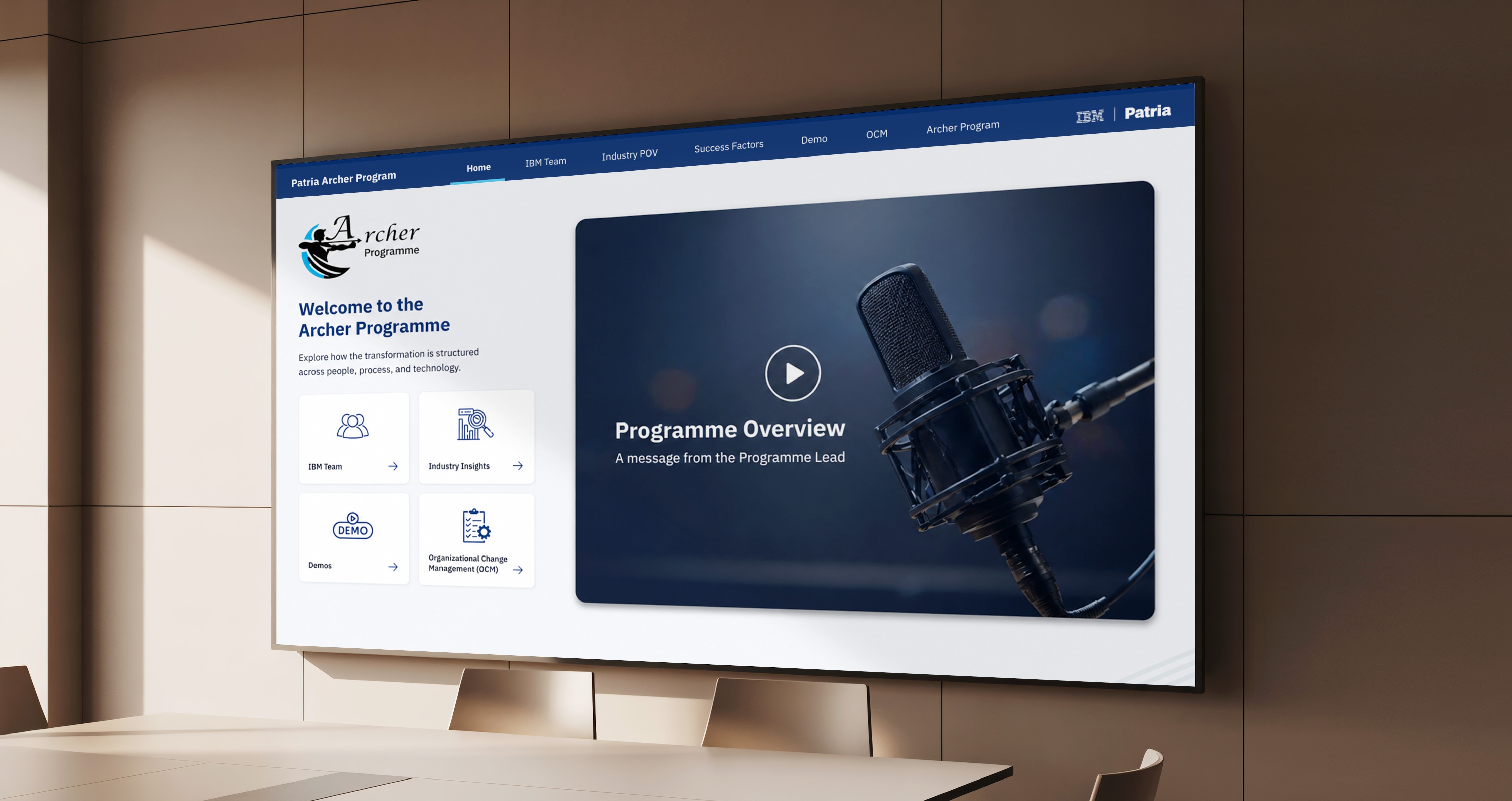
Patria is a Finnish aerospace and defence company. IBM was pitching a large scale SAP S/4HANA transformation called the Archer Programme. It covered finance, supply chain, production, project management, and aviation services.
The audience included IT leadership and procurement teams evaluating multiple vendors. This was not a guided pitch. The experience needed to work on its own, something stakeholders could explore, revisit, and understand without a walkthrough.
I worked on designing the micro-site end to end with one teammate, shaping how the proposal was structured, navigated, and understood.
IBM Consulting
UX & Proposal Designer
6 months
Web micro-site
Information architecture
Journey mapping
Interaction design
Visual design
Challenge
When I started, there wasn’t a clear structure for how the proposal should be presented. Content existed across multiple formats, but it was not designed for someone evaluating it independently.
The challenge was not just volume, but variation in expectations.
IT stakeholders needed to understand architecture, integrations, and feasibility. Procurement teams needed clarity around people, delivery, and accountability.
Trying to bring this into a single linear narrative would have made the experience harder to use.
The problem became about structuring complexity in a way that different stakeholders could navigate without losing context.
Process
Research & Discovery
The first step was understanding what already existed.
I worked with internal stakeholders and reviewed proposal material, technical documentation, and early drafts. Most inputs came as slides and fragmented flows. They were detailed, but not structured for navigation.
Journey maps were inconsistent, personas were reused without clarity, and technical sections felt disconnected.
This helped surface a few gaps. There was no clear link between personas and workflows. Information was repeated in different formats. Some sections went too deep, while others stayed too high level.
Shaping the Direction
Before moving into wireframes, I focused on bringing consistency to how the content was represented.
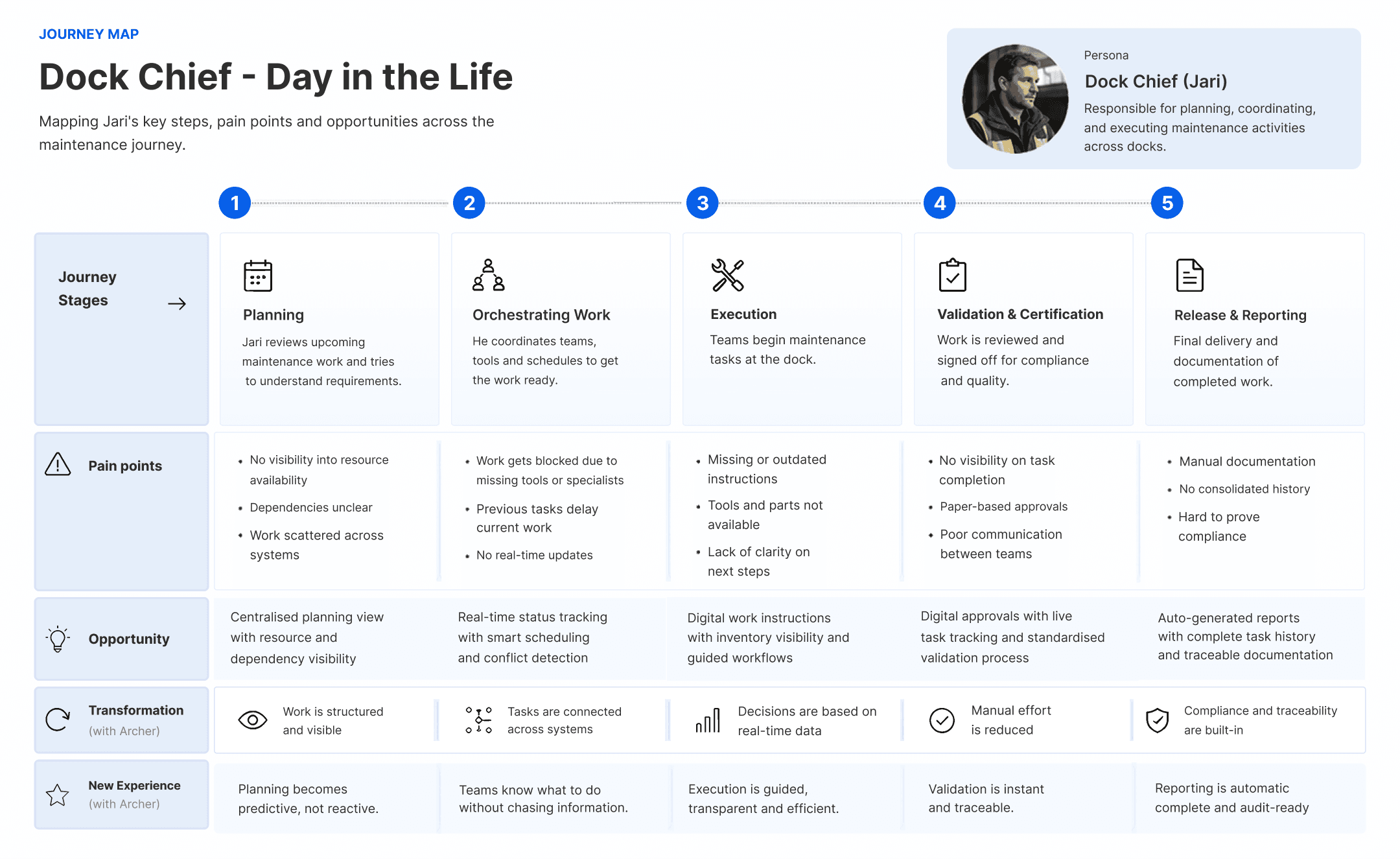
Journey maps were simplified to highlight key steps. Supporting information was placed closer to each step to reduce back and forth.
Personas were standardised across modules to create continuity between demos, OCM, and workflows.
This shifted the project from scattered content to a more structured experience.
Information Architecture
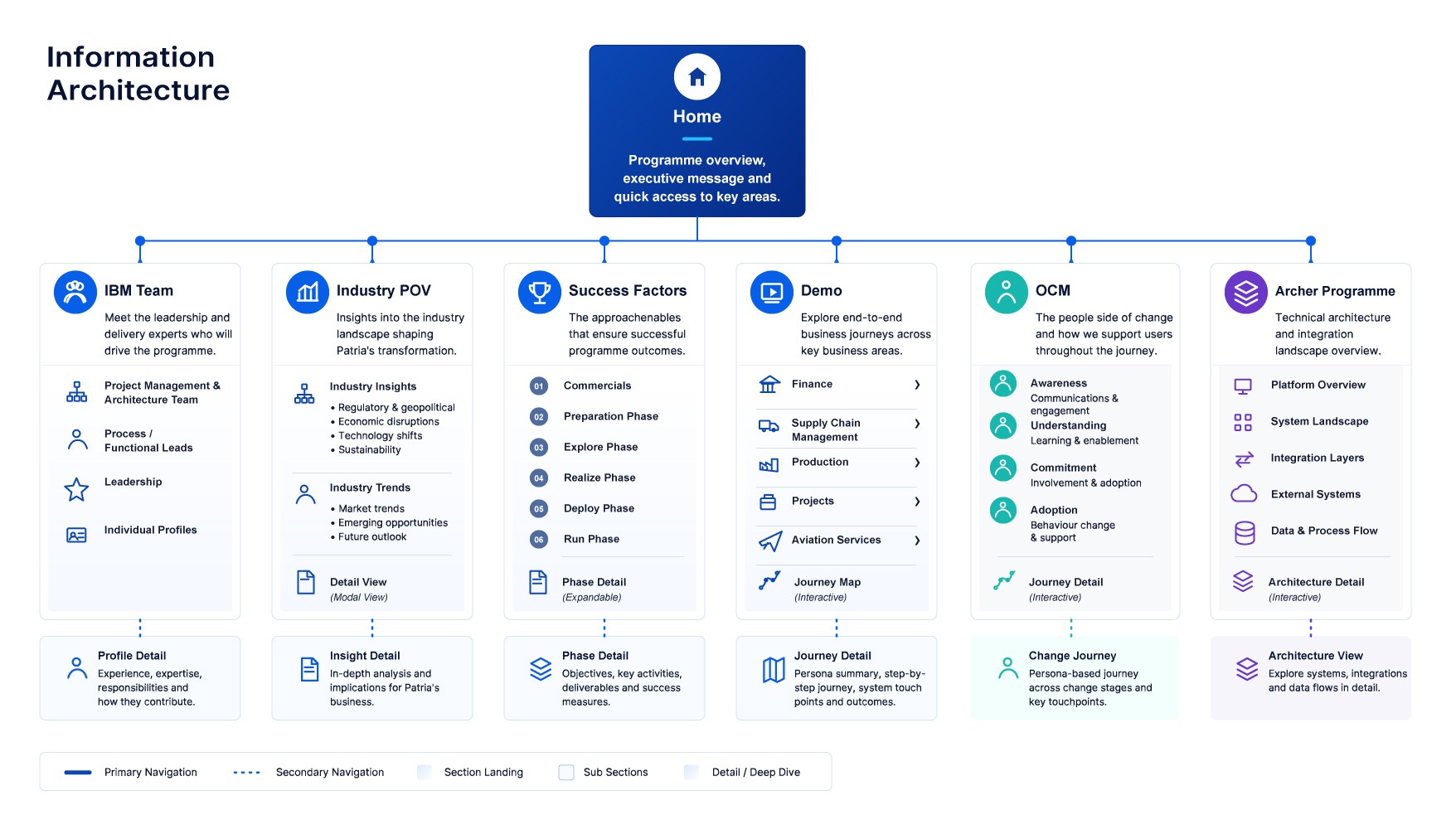
The experience was organised into seven sections, each supporting a different part of the evaluation.
The home page set the context. The IBM team section focused on people and roles. Industry POV added domain context. Success factors broke down the transformation approach into clear phases.
The demo section translated business areas into persona-led journeys. The OCM section focused on the employee experience of change. The Archer Programme section provided a deeper view of the system landscape.
The structure allowed users to move between sections based on what they needed, instead of following a fixed path.
Key Decisions
A few decisions shaped the experience.
The same content was structured to support different intents, instead of creating separate flows for each stakeholder.
OCM was treated as a narrative, using a single persona to make change easier to understand.
The demo section focused on workflows rather than features, showing context and progression.
The architecture view was made explorable so users could engage with complexity at their own pace.
Wireframing & Prototyping
Each section was approached differently based on its purpose.
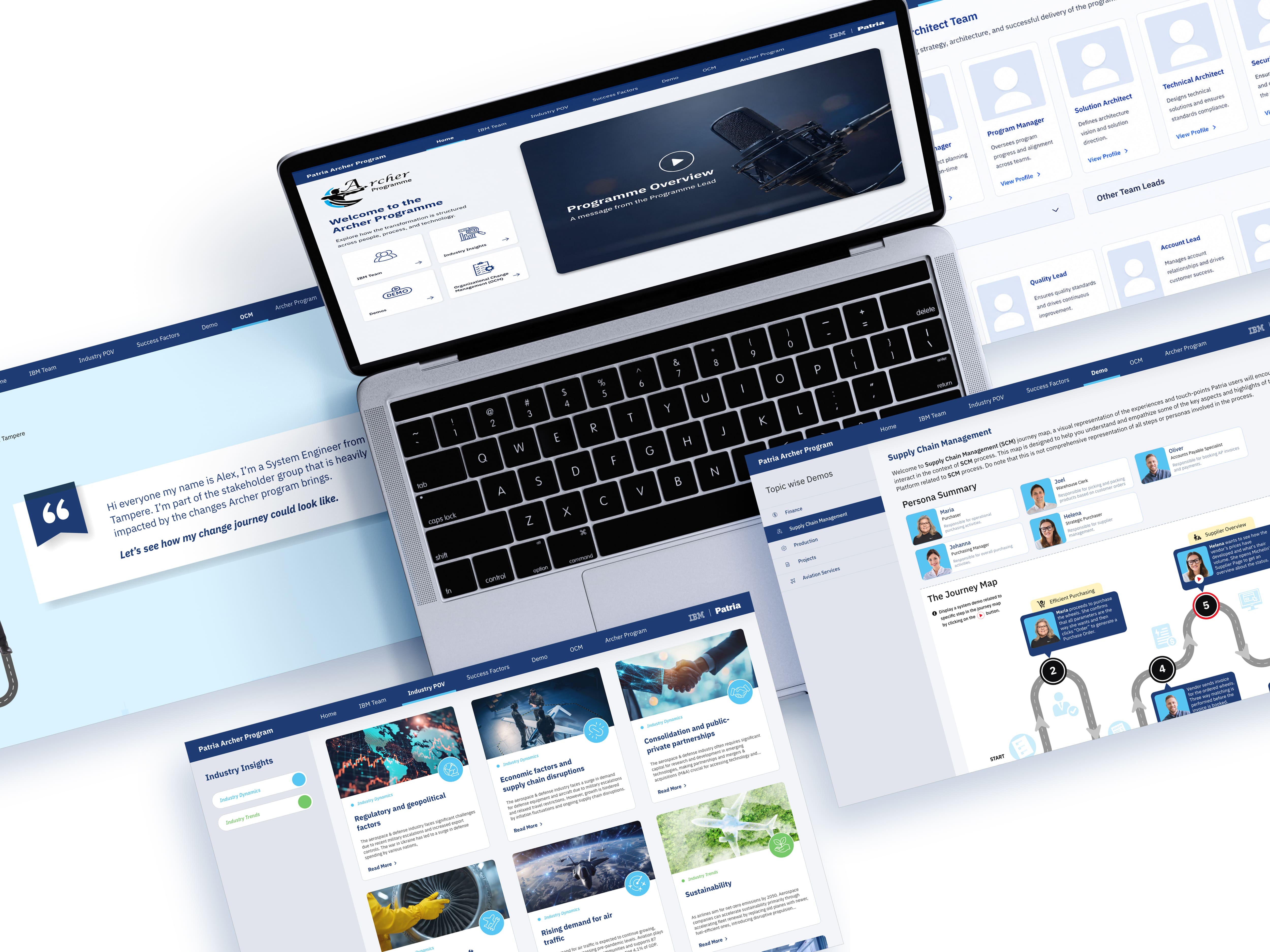
The OCM journey focused on storytelling. The demo section focused on clarity across workflows. The architecture section focused on layering information without overwhelming the user.
The goal was consistency in experience, not uniformity in layout.
Visual Design & Style Guide
The micro-site was built using IBM’s Carbon Design System, adapted for this context.
Carbon provided the foundation. The focus was on clarity and readability, especially where the content was dense.
It was important to balance IBM’s identity with the client context so the experience felt relevant.
Constraints & Considerations
The project involved a sensitive domain, so real data and workflows could not be fully exposed. There was no direct access to end users, and content came from multiple sources.
I worked closely with internal stakeholders and used regular walkthroughs to validate decisions and direction.
Results
Conclusion
Most of the work in this project was about structuring information before designing it.
Once the structure was clear, the design decisions became more straightforward.
With more time, I would have validated the structure with actual client stakeholders earlier, especially to understand how different audiences move between business and technical content.
Due to the sensitive nature of this project, certain details and visuals have been generalised or modified. The work shown reflects the structure, design approach, and decision making used in the actual engagement.