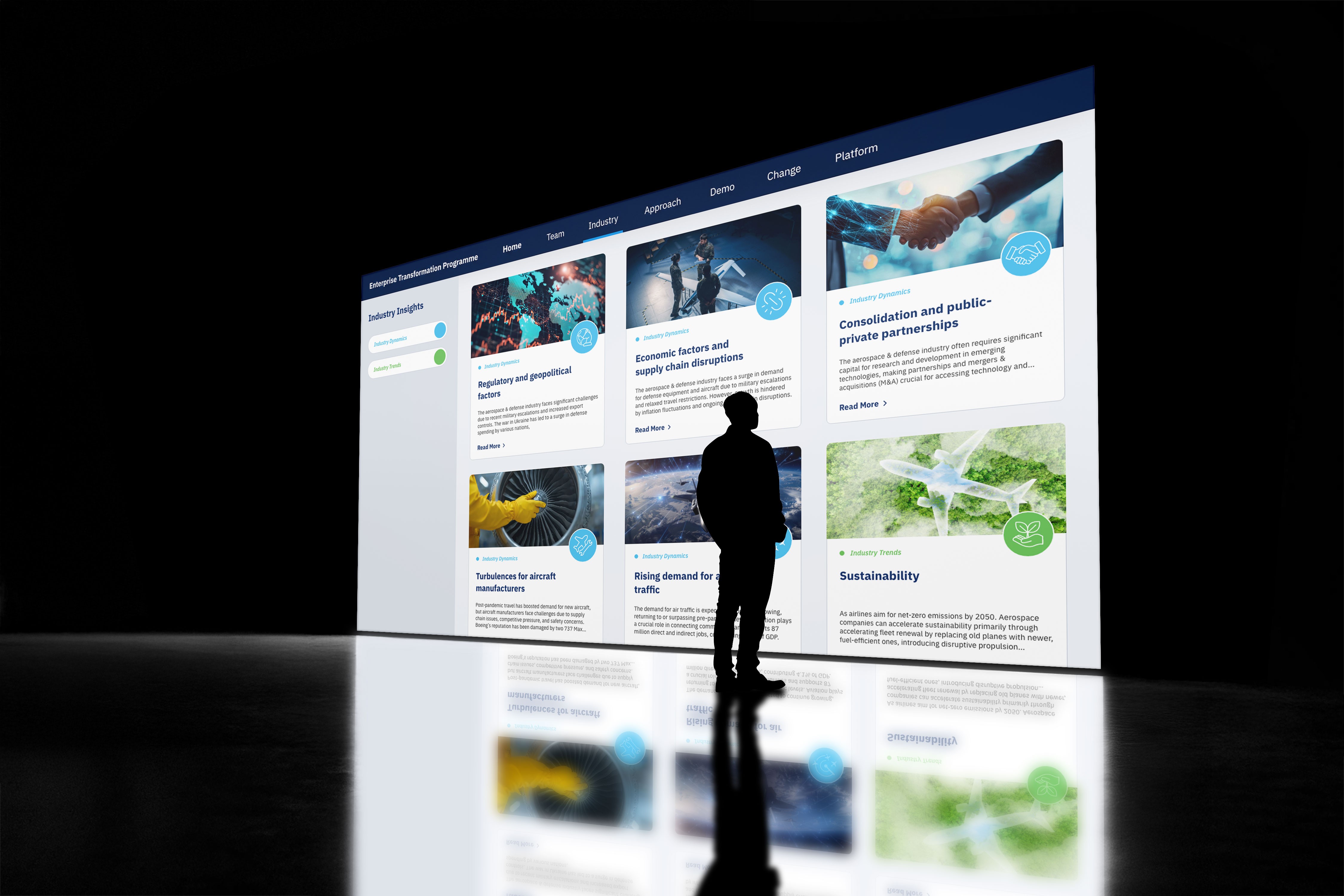
Designing a Defence Transformation Proposal Experience
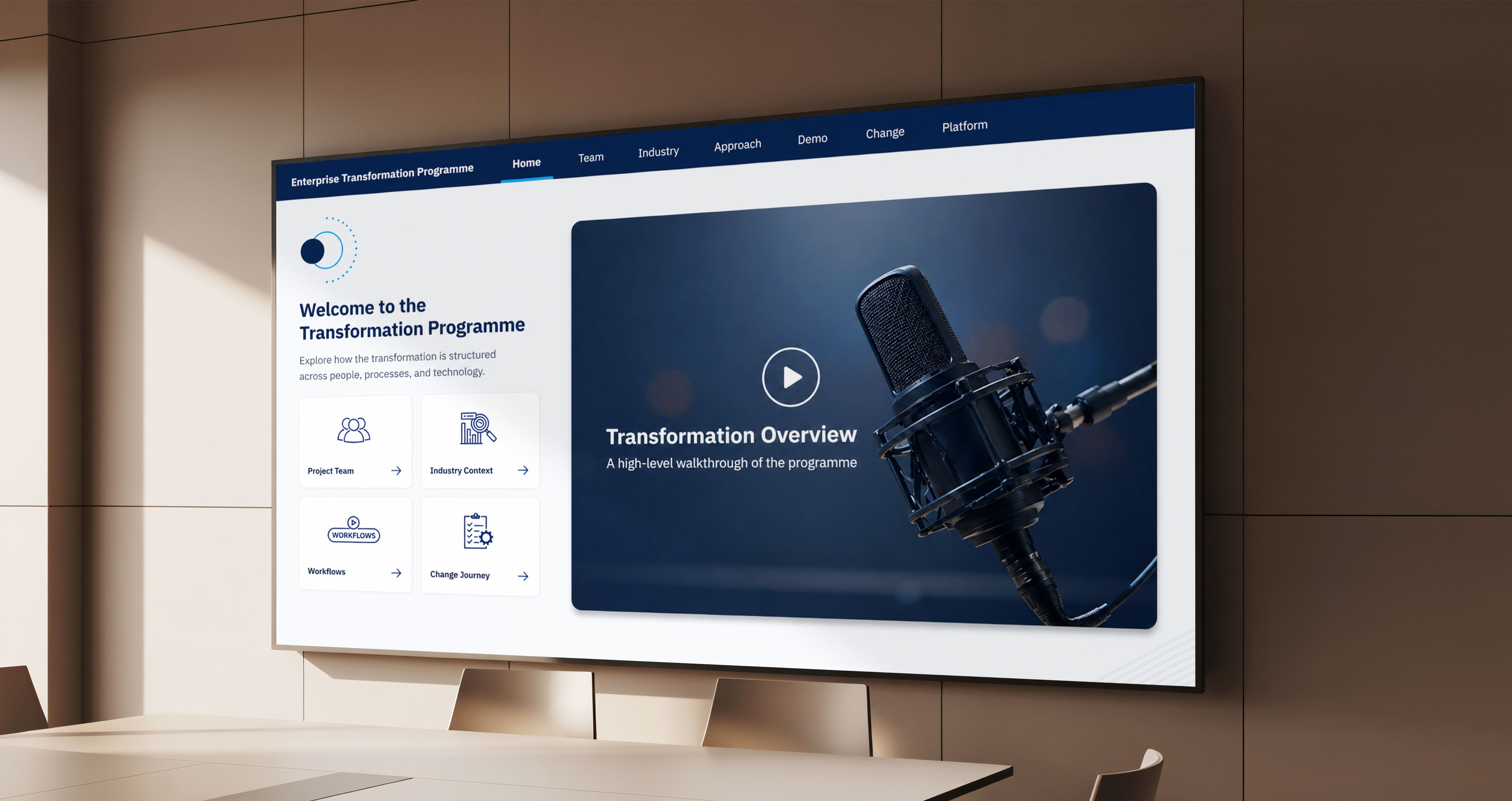
This project focused on designing a micro-site for a large-scale enterprise transformation across finance, supply chain, production, project management, and aviation services.
It wasn’t a guided pitch.
Stakeholders needed to explore and evaluate the proposal on their own.
That changed what this needed to be.
I worked on the experience end-to-end with one teammate, shaping how the proposal was structured, navigated, and understood.
IBM Consulting
UX and Proposal Designer
6 months
Web micro-site
Information architecture
Journey mapping
Interaction design
Visual design
Challenge
Process
Research & Discovery
I started by reviewing what already existed.
Most content came in as slides and fragmented flows.
Detailed, but not something you could actually navigate.
Journey maps were inconsistent
Personas appeared in multiple places without context
Technical sections felt disconnected
The same information showed up in different formats
It was hard to see the full picture.
Shaping the Direction
Before moving into wireframes, I focused on structure.
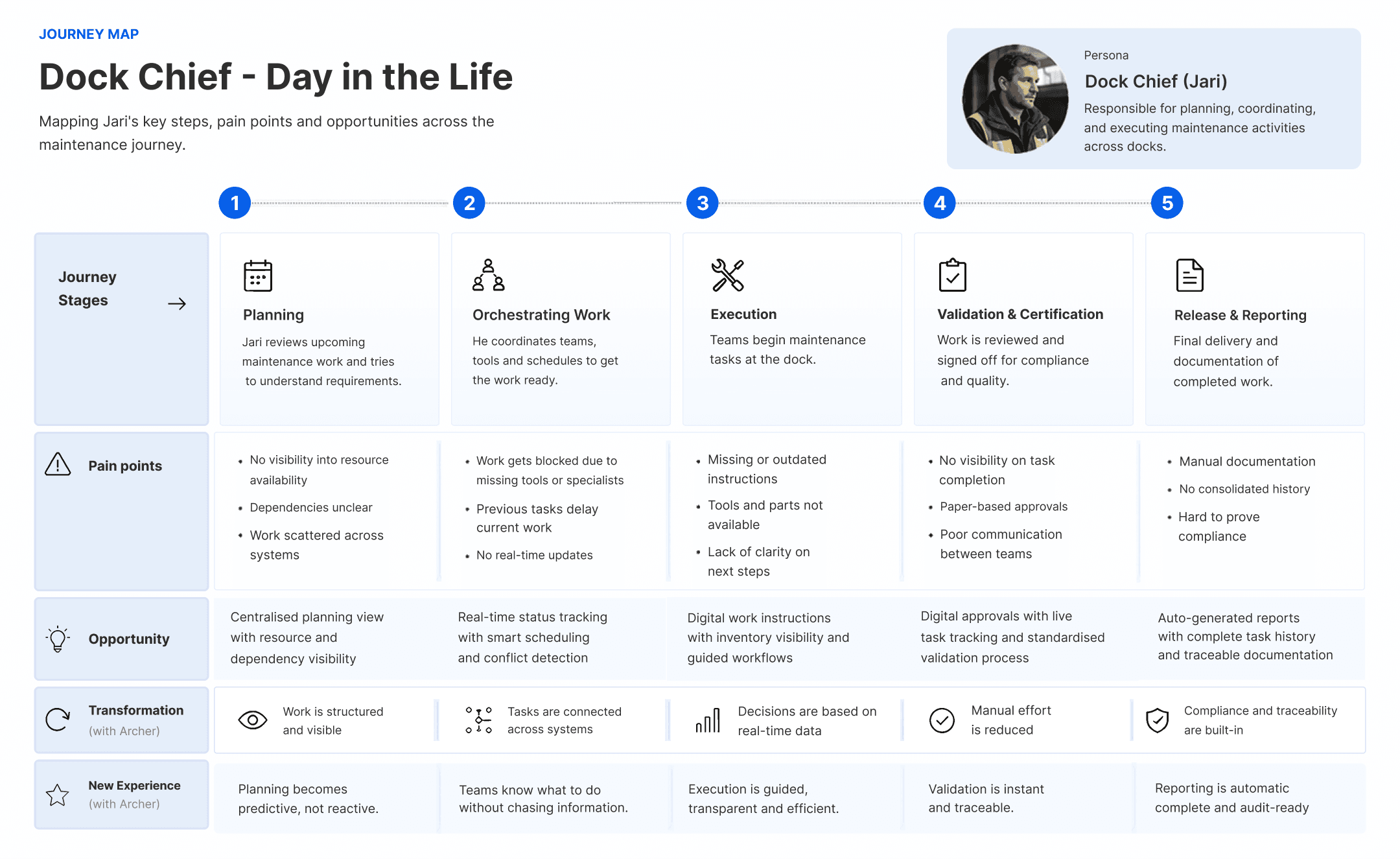
Simplified journey maps to highlight key steps
Moved supporting information closer to decision points
Standardised personas across workflows and sections
Working closely with stakeholders, we aligned on how the experience should be organised.
This is where things started to come together.
What was earlier a collection of content began to behave like a system.
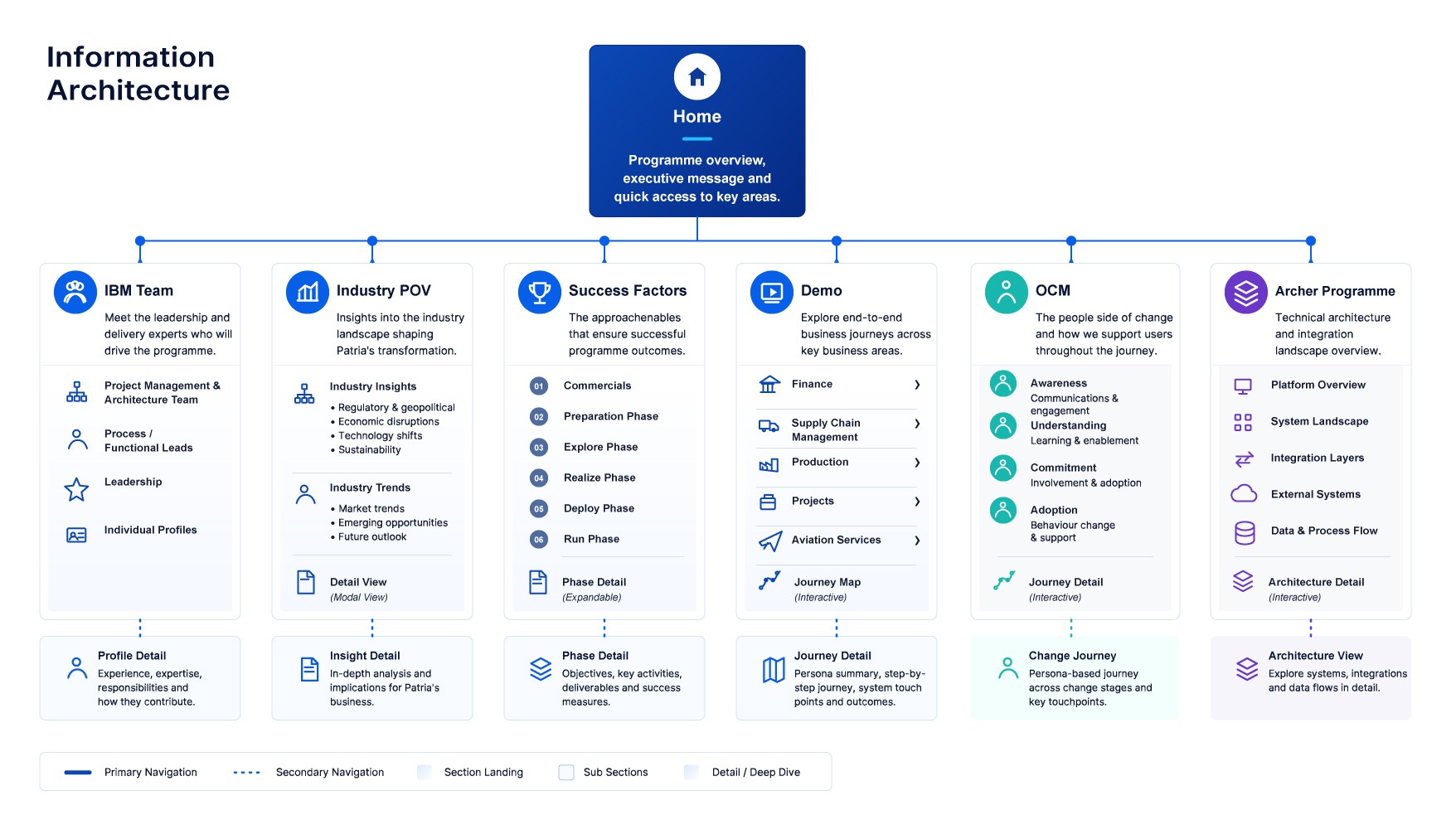
Information Architecture
The experience was structured into seven sections, each supporting a different part of the evaluation:
Home for context and entry points
Team for roles and ownership
Industry for domain context
Transformation for phased approach
Demo for workflow-based journeys
Change for employee experience over time
Platform for systems and integrations
This allowed stakeholders to move through the experience based on need, not sequence.
Key Decisions
Designed one structure to support multiple stakeholder needs
Focused demos on workflows instead of features
Treated change as a continuous journey through a single persona
Made architecture explorable instead of presenting everything at once
Experience Design
Each section required a different level of depth.
Demo focused on clarity across workflows
Change journey focused on continuity over time
Architecture balanced detail without becoming overwhelming
The goal wasn’t visual consistency alone.
It was making sure everything felt connected.
Visual Design
The micro-site was built using IBM’s Carbon Design System, adapted for this context.
Carbon ensured consistency, but the focus stayed on clarity, especially where the content was dense.
It was important that the experience didn’t feel like a generic enterprise template.
Constraints & Considerations
Sensitive domain, so real data and workflows couldn’t be shown
No direct access to end users during this phase
Content came from multiple stakeholders
Regular walkthroughs helped validate decisions and keep alignment.

Outcome
“Anisha and team did an amazing job implementing the microsite in an extremely short timeframe. The team was flexible and quick to implement proposed changes to the design. This microsite really elevated our demo presentation to a new level. Customer was really happy with the microsite content we provided.”
TL
Tomipekka Lehtonen
Client Partner, IBM Consulting