
Why Most UX Problems Are Actually Structure Problems
Most usability issues aren’t visual. They come from unclear structure, broken flows, and poor information architecture.
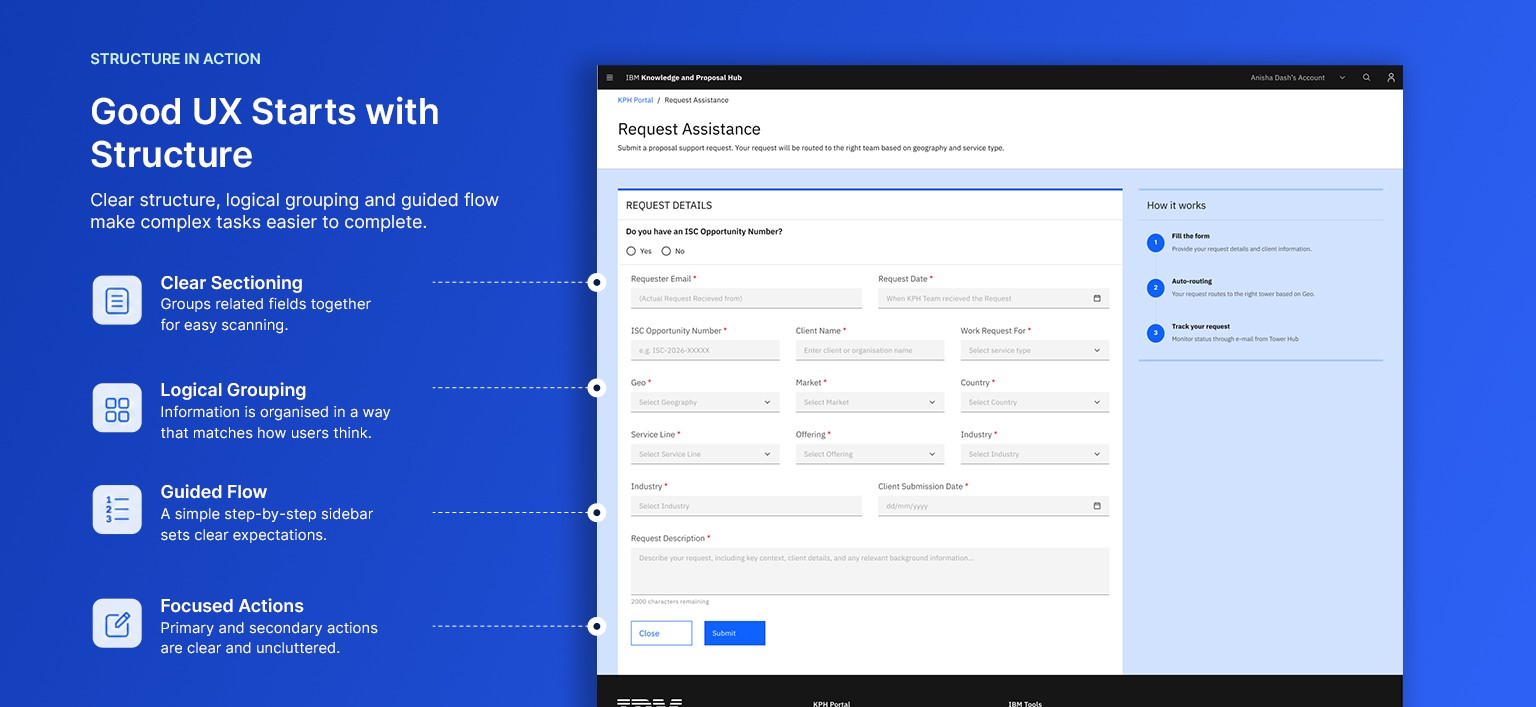
Most usability issues aren’t visual. They come from unclear structure, broken flows, and poor information architecture.
A lot of feedback in design reviews sounds the same.
“Make it cleaner.”
“Improve the UI.”
“This feels confusing.”
It’s easy to jump straight into visual fixes. Tweak spacing, refine components, try a different layout. But more often than not, that’s not where the real problem is.
In most of the work I’ve done, especially on larger systems, the issue usually sits deeper. It’s structural.
When something feels confusing, it’s rarely because of colours or typography. It’s because the experience doesn’t have a clear backbone. The flow doesn’t guide you. The information isn’t grouped in a way that matches how you think. You’re left figuring things out instead of moving through it.
Steve Jobs once said, “Design is not just what it looks like and feels like. Design is how it works.”
And how it works is almost always tied to structure.
I’ve seen this play out a lot in enterprise systems. You open a page and everything technically exists, but nothing connects. Too many fields, unclear hierarchy, no real sense of what comes first or what matters. You can polish the UI endlessly, but if the flow itself isn’t clear, the experience still feels heavy.
This is where things start to shift when you step back from UI and look at:
how users move from one step to another,
what decisions they’re being asked to make,
and whether the system is reducing or adding cognitive load.
Don Norman talks about this idea of “making things visible”, helping users understand what’s possible and what to do next without having to think too much. That only happens when the structure is doing its job.
Once that foundation is right, the design almost gets easier. Screens feel lighter. Decisions feel obvious. You’re not trying to fix confusion visually anymore, because you’ve removed it at the root.
What this really comes down to is simple.
Good UX isn’t just about making things look better.
It’s about making things make sense.