
Designing for Millions vs Designing for Systems
E-commerce and enterprise products solve very different problems. Here’s what changes when you design for scale vs structure.
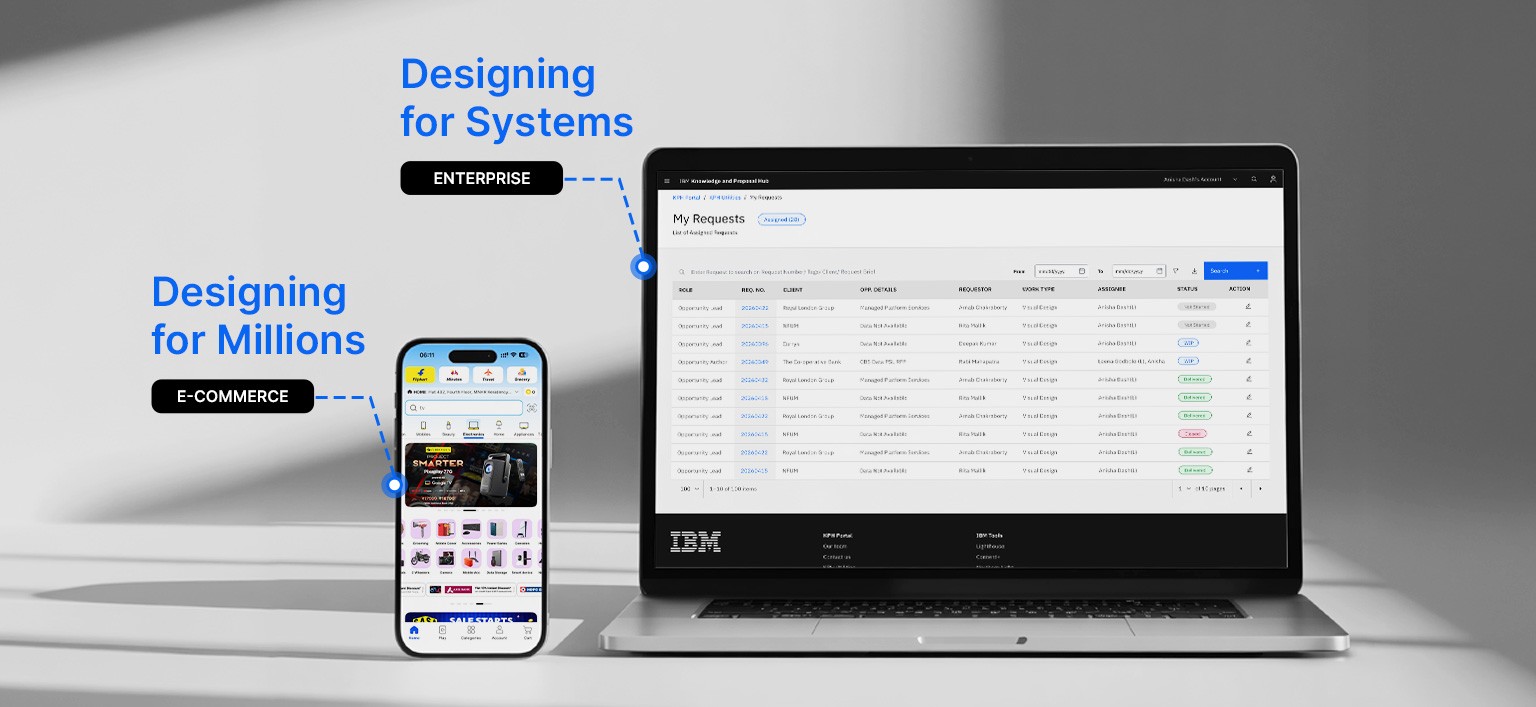
E-commerce and enterprise products solve very different problems. Here’s what changes when you design for scale vs structure.
Working on Flipkart and later on enterprise platforms at IBM felt like switching between two very different design mindsets.
At Flipkart, everything moved fast.
You’re designing for millions of users who are browsing, comparing, and deciding in seconds. The focus is always on reducing friction and helping users move forward quickly.
A small change in layout or hierarchy could directly impact how easily users find products or make decisions. You’re constantly thinking about how to make discovery faster, comparisons clearer, and actions more obvious.
At IBM, the context shifted completely.
Users aren’t browsing. They’re working.
They’re navigating complex systems, filling detailed forms, managing workflows, and often coordinating across teams.
The challenge isn’t speed alone.
It’s helping users understand what’s happening and what they need to do next.
A lot of the work here comes down to structuring information better.
Grouping related fields, guiding users step by step, and reducing the chances of errors in longer flows.
In one of the internal platforms I worked on, even small structural changes made a noticeable difference. Not because the UI looked better, but because users didn’t have to stop and figure things out.
That’s been the biggest shift for me.
In e-commerce, success often looks like faster decisions and fewer drop-offs.
In an enterprise, success looks like fewer mistakes and clearer workflows.
The principles stay the same.
You’re still designing for clarity, usability, and ease.
But how you apply them changes based on context.
And learning to move between these two has shaped how I approach design more than anything else.